TPM-OS turns your improvement system into an AI-supported operating model — identifying losses, prioritising actions, and training your people without consultant dependency.
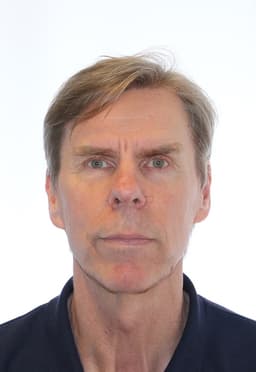
M.Sc. Electrical Engineering (LTH, Lund) · MBA International Business (Uppsala). 25+ years transforming manufacturing operations across Europe, China — where I lived for a decade — and Southeast Asia. Mandarin-speaking.
TPM-OS is not a general operational excellence tool. It was designed for a specific intersection of need — and if you recognise yourself below, you are in exactly the right place.
You operate production sites in Southeast Asia or China — and you know that implementing European-standard TPM practices in Asian operational cultures requires a different kind of expertise. Not a translation. A real system.
You have a TPM programme. It generates reports, workshops, and KPI decks. But the question "what should we fix next — and why?" still gets answered by gut instinct rather than system intelligence.
You have clients, methodology, and credibility — but no scalable digital platform to deliver AI-powered diagnostics and continuous improvement support between engagements. TPM-OS is your white-label infrastructure.
After 25+ years working inside production plants across Europe, China, and Southeast Asia, the same pattern repeats regardless of industry, culture, or maturity level.
"TPM was designed as a decision-making operating system — for the shop floor and for management. When it stops doing that, it slowly turns into bureaucracy."
Teams can see stoppages. They cannot quantify them in terms that drive executive decisions. The improvement system talks in minutes; the board talks in euros.
Ownership is unclear. The loudest voice or highest hierarchy determines which problem gets resources — not the highest-value opportunity. This is not a people problem. It is a system design problem.
When the expert leaves — consultant, engineer, or champion — the system regresses. In cross-cultural deployments across Asia and Europe, this is not a risk. It is a certainty unless the system is designed to prevent it.
In 15 minutes, see whether your TPM system drives prioritised decisions — or generates activity without leverage.
A 15-minute self-assessment for senior operations leadership. Not a maturity model. Not a benchmark. A system audit designed to reveal exactly where your TPM programme stops making decisions.
The TPM Decision Gap Assessment is a facilitated deep-dive — a structured 2-hour session with a full written analysis of your system constraints and a prioritised 90-day action roadmap.
Explore the Paid Assessment — from €2,500Built on 25+ years of encoded TPM knowledge. Not a dashboard. An operating model that tells you what to do next, and why.
AI-generated gap analysis and prioritised roadmap based on your maturity assessment responses, benchmarked against 25+ years of plant data.
Real-time loss classification mapped against the 16 Major Losses framework. Surfaces the top 3 economic opportunities automatically — ranked by value, not volume.
24/7 conversational AI trained on your plant's TPM knowledge base. Answers operator questions, guides problem-solving, and surfaces relevant best practices from your history.
Compare your pillar performance against anonymised industry benchmarks — segmented by region, industry, and plant size. Powered by network data across all TPM-OS clients.
The Decision Gap Assessment is available today. The TPM-OS platform is in active development — join the early access list to shape it and be first in.
A structured 2-hour diagnostic session that reveals precisely where your improvement system loses its leverage — delivered with a written gap analysis and a prioritised 90-day action roadmap.
The AI-powered TPM operating system — loss intelligence, decision dashboards, AI coaching, and role-based training. Built on 25+ years of encoded TPM knowledge.
Platform access combined with direct personal involvement — for complex cross-cultural deployments, multi-site rollouts, or organisations that need more than a tool.
TPM consulting firms interested in a white-label partnership — get in touch →
Every case below is drawn from live engagements. Companies and individuals are anonymised; results are real and verified.
A global dairy manufacturer needed consistent TPM governance and global best practices across seven Asian production sites. As lead programme consultant, the engagement covered full WCOM deployment, plant and pillar audits, and local team capability building. Machine downtime was reduced significantly, energy losses eliminated, and organisational effectiveness improved — generating approximately €3 million in annual savings. Two plants achieved JIPM Award recognition.
A fast-growing plant-based drinks company needed a complete Operational Excellence system built specifically for their culture, production model, and global ambition — not an adaptation of someone else's methodology. Over a 3-year engagement, the full OPEX System and Continuous Improvement Toolbox was designed from scratch and deployed across factories in Europe, Asia, and the USA. The plant was subsequently ranked among the top performers in the group for both operational results and cultural transformation.
Building a China sourcing organisation required establishing a quality assurance process for the transfer of 4,000 spare-part types from European to Chinese manufacturing. The transfer and qualification framework, designed and led from the ground up, achieved 50% average cost savings while maintaining a 0.2% claims rate. Three subsequent capital equipment production projects generated approximately €4 million in annual company savings. The China quality team was ranked among the top performers in global Supply Chain Operations.
Gösta Seuranen · Malmö, Sweden
Weekly TPM insights from 25+ years on the plant floor
I started my career as an electrical engineer — leading R&D, product development, and manufacturing at Emotron AB in Sweden for nearly a decade. I supervised over 20 engineers and PhDs, launched motor control products from concept to OEM scale for customers like ABB and Danfoss, and built my first real understanding of what it means to run a factory that actually works. That grounding in how machines think, fail, and can be made better never left me.
After joining Tetra Pak and then Efeso — and working with over 30 multinationals across three continents — I kept seeing the same pattern regardless of industry, culture, or how much a company had invested in TPM or Lean. The data was there. The workshops ran. The pillars were named on the wall. But when a plant manager needed to answer one simple question — what should we fix next, and why? — the honest answer was almost always: we don't really know. The problem was never resistance to change. It was that the system had been designed to generate activity, not decisions. That insight shaped everything I have done since.
In 2004 I moved to China with Tetra Pak, and I stayed for a decade. I led supply chain operations across China and Hong Kong, then moved into consulting — managing TPM and WCOM programmes across China, Singapore, Mongolia, Thailand, Vietnam, and Indonesia. I learned Mandarin. I built teams. I watched European operational standards collide with Asian manufacturing realities, and I learned what it actually takes to make the transfer work — not as a concept, but factory by factory, supervisor by supervisor. That decade is not simply a line on my CV. It is the lens through which I understand what cross-cultural operational transformation really requires, and why so many programmes fail at exactly that intersection.
I built TPM-OS because I watched the same knowledge — 30 years of pattern recognition, failure modes, cultural nuance, and implementation logic — walk out of every engagement when the consulting contract ended. The client was left with a system that needed an expert to run it. That is not a sustainable model, and it is not what TPM was designed to be. The convergence of AI capability and structured knowledge management now makes it possible to encode that expertise into a platform — one that can tell a plant team not just what their OEE is, but why it is what it is, what the highest-leverage fix is, and how to sequence the change given their specific operational and cultural context. That is what TPM-OS is: not a dashboard, but a decision system.
This book is written for the plant manager, operations director, and CI leader who already knows what TPM is — and keeps watching it stall. It argues that the methodology is sound but the management system around it is almost universally broken, and it provides a practical, field-tested framework for fixing it. Drawing on 25+ years and three continents of implementation experience — including a decade living and working in China — it is the cross-cultural, AI-era guide to continuous improvement that no academic textbook has attempted.
Be notified when the book launches and receive exclusive pre-publication chapter excerpts.
No spam. Unsubscribe anytime.
Follow on LinkedIn for weekly TPM insights, implementation case stories, and AI-enabled improvement frameworks — from 25+ years on the plant floor.
Follow Gösta Seuranen →A short, direct review of where your improvement programme loses its leverage — and whether AI support is the right next step for your situation. No pitch. No obligation.